Maywood guide
PEX Repiping vs Copper in 1980s and 1990s Bothell Homes: A Maywood Guide
If your house was built in the 1980s or early 1990s, the supply pipes inside the walls may be a material the industry later walked away from. Here is how to check, and how PEX and copper compare when it is time to replace.
First find out what you have. Homes built from 1978 to mid-1995 may contain polybutylene, a gray or blue flexible plastic pipe known for failing without warning. If you have it, replacement is the safer path. PEX usually goes in with less wall opening; copper is rigid, soldered and more work. Get written quotes for both and let the layout of the house decide.
The neighborhood
Maywood and Beckstrom Hill: check before you assume
Bothell Municipal Code lists Maywood / Beckstrom Hill as a named subarea in BMC 12.04.120. We did not find a record of which Bothell neighborhoods contain polybutylene, and we will not name streets we cannot source. The reliable test is your house’s build year and a look at the pipe itself.
Polybutylene was manufactured between 1978 and mid-1995 for home plumbing, according to the National Association of Certified Home Inspectors. Many insurers are wary of homes that have it and may decline coverage or raise premiums, so a check is worth doing before a sale or a renewal.
A home inspector describes it as gray or blue-gray flexible pipe with PB markings, commonly found in half-inch, three-quarter-inch and one-inch sizes. If you see it, or cannot tell what you have, a plumber can identify it in minutes.
Why it fails
What went wrong with polybutylene
The failure is chemical. Polybutylene reacts with common water disinfectants such as chlorine, which weakens the material and can crack it from the inside (summary from Brainbound). Bothell’s water is supplied through Seattle Public Utilities’ wholesale system, per SPU’s 2025 wholesale survey, and treated water is exactly what such pipes are exposed to.
The practical trouble is that failures can come without warning. Experts are split on whether to replace poly that has never leaked, but most plumbers recommend it, and a leak behind a wall costs more than a planned repipe.
PEX or copper
Comparing the two replacements
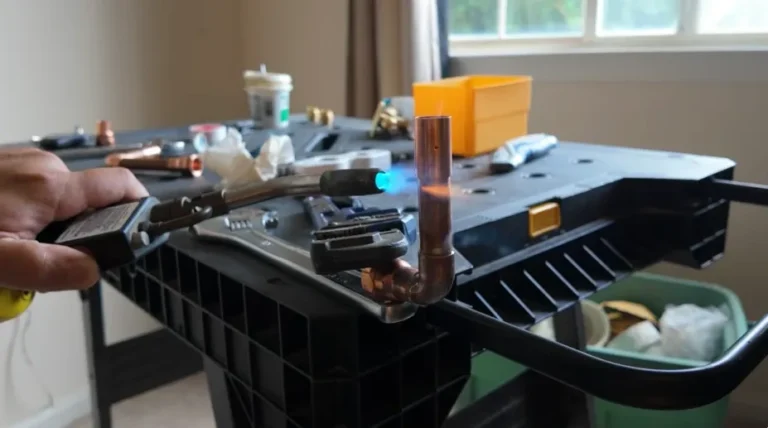
Both are accepted replacements. PEX is flexible, easy to install, and resists chlorine and scaling. Copper is rigid and joined with solder or fittings. The right choice depends on your walls and your priorities, not on a slogan.
| Factor | PEX | Copper |
|---|---|---|
| Wall opening | Often fished through existing chases, with some patching expected | Rigid runs usually need more access |
| Installation | Fewer joints in long runs | More joints, each one a possible leak point |
| Water chemistry | Not affected by chlorine | Different wear patterns; ask about your water |
| Look and feel | Out of sight in most jobs | Visible in basements and crawl spaces |
We do not quote prices in guides because every house is different. Ask for written quotes for both materials, and ask each bidder what they plan to open and patch. Our repiping service page explains how a whole-house job is staged.
Plan on a permit. Bothell’s BMC 20.02.095 requires one for installing a plumbing system, with exemptions, and our permit guide explains how to confirm what your job needs. After the job, a pressure check makes sure new lines are not running at a pressure that stresses them.
Straight answers
Repiping questions from Bothell homeowners
How do I know if my Bothell home has polybutylene?
Check the build year first; it was used from 1978 to mid-1995 (NACHI). Then look near the water heater, main shutoff and meter for gray or blue-gray flexible pipe marked PB.
Does polybutylene always leak?
No, but it can fail without warning. Experts disagree about replacing poly that has not leaked, which is why most owners decide based on insurance, age and risk tolerance.
Will insurance be a problem?
It can be. Many insurers are wary of polybutylene and may decline coverage or raise premiums, per Repipe Specialists. Ask your own insurer.
Is PEX or copper better?
Neither wins everywhere. PEX usually means less wall opening; copper is a traditional rigid choice. Compare written quotes and the work each one involves in your house.
How long does a whole-house repipe take?
It depends on the size of the house and access. We scope it on site and give a written plan rather than a guess.
Related
Other things we fix in Bothell
Repiping
Replace failing supply lines.
Water Pressure & PRV
Protect new lines from high pressure.
Leak Detection
Find the leak before you decide.
More Bothell plumbing guides
Sources
Where these facts come from
- Bothell Municipal Code 12.04.120 (subareas)
- Bothell Municipal Code 20.02.095 (plumbing permits)
- NACHI: polybutylene for inspectors
- Repipe Specialists: polybutylene lawsuit and insurance (plumbing company)
- Home inspection guide: identifying polybutylene
- ProCraft guide: polybutylene replacement (plumbing company)
- Absolute Drains and Plumbing: polybutylene, PEX and copper
- Brainbound: polybutylene failure mechanism
- Seattle Public Utilities 2025 wholesale customer survey (lists Bothell)
Not sure what is in your walls?
We identify the pipe and give you written options. Answered 24 hours a day.