Westhill guide
What a Thermal Expansion Tank Does and When to Replace It: A Westhill Guide
That small tank sitting above or beside your water heater is easy to ignore until the relief valve starts dripping. It has one job: give hot water somewhere to go when it expands. When it fails, the pressure has to go somewhere else, and that is usually the relief valve, a faucet cartridge or a toilet fill valve.
Water barely compresses, so when a water heater heats it inside a closed system, pressure climbs. A home with a check valve, backflow preventer or pressure reducing valve is a closed system, and Uniform Plumbing Code 608.3 requires an approved, adequately sized expansion tank on the building side of that device. A waterlogged tank, a relief valve that drips after the heater runs, or pressure that spikes overnight are the signs it needs attention.
The neighborhood
Westhill: a hill with three water providers
The City of Bothell’s Westhill Subarea Plan describes about 701 acres in west Bothell, mostly in King County with a small portion in Snohomish County. Elevation runs from about 268 feet in the northwest Conifer View neighborhood to about 20 feet along the Sammamish River south of SR 522. Most homes are detached single family, at roughly four to six homes per acre, with Bothell High School and Westhill Elementary inside the subarea.
Water comes from three sources, depending on where you are. Alderwood Water and Wastewater District serves the Snohomish County part. In the King County part, Northshore Utility District serves the top of Westhill, the west-central and southern areas, and the City of Bothell serves the extreme east-central and southeast portions. The plan also notes some undeveloped or partially developed properties still served by septic systems.
How it works
Why heated water needs somewhere to go
The International Association of Plumbing and Mechanical Officials explains it in its Code Spotlight on UPC 608.3: water is, for practical purposes, incompressible. Heat it in a closed container and the pressure rises sharply. Storage water heaters make the effect bigger because they hold more water at higher temperatures.
In an open system, that extra volume simply pushes back into the water main. But a check valve, backflow preventer or pressure regulator stops building pressure from flowing back to the supply. With nowhere to go, the expanding water raises the pressure in every pipe in the house until something gives. The expansion tank absorbs it. If pressure still climbs, the relief valve on the heater opens and discharges until the pressure drops below its set point.
The code
What Uniform Plumbing Code 608.3 requires
Washington’s state building code adopts the 2021 edition of the Uniform Plumbing Code, with state amendments, in WAC chapter 51-56. As quoted by IAPMO, UPC section 608.3 says a water system provided with a check valve, backflow preventer or other normally closed device that prevents dissipation of building pressure back into the water main shall be provided with an approved, listed and adequately sized expansion tank or other approved device, installed on the building side of that device.
In plain words: if your home has a pressure reducing valve, a backflow device or a check valve on the main, it needs an expansion tank, sized for your heater and pressure, between that device and the house. When we replace a water heater on a closed system, we include the tank in the written quote rather than leave it out to make the number look smaller.
Signs
Five signs your expansion tank has failed
- The relief valve drips after the heater runs, then stops. That is the classic sign of thermal expansion with nowhere to go.
- The tank sounds solid when tapped. A working tank sounds hollow at the top. A waterlogged tank sounds dull all the way up.
- Water comes out of the air valve. Press the small valve on the end of the tank briefly. Air is good. Water means the bladder has failed.
- Pressure swings. A gauge on a hose bib that reads normal in the morning and much higher after showers or laundry points to expansion.
- Toilets run on their own or faucets start dripping soon after a new water heater went in.
A pressure gauge that threads onto a hose bib costs little and tells you a lot. Note the reading in the morning, then again after the heater has run. If it climbs a lot, call us before you replace anything else.
What we do
How we check it, and what replacement involves
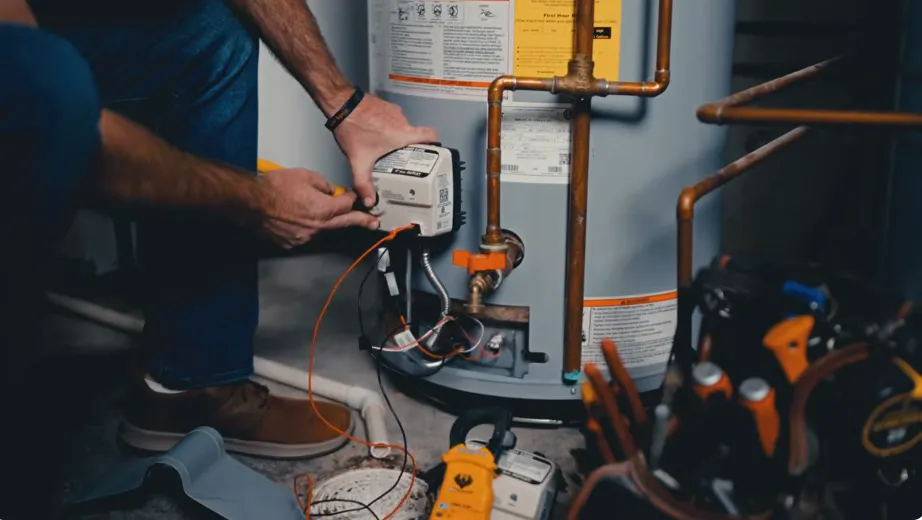
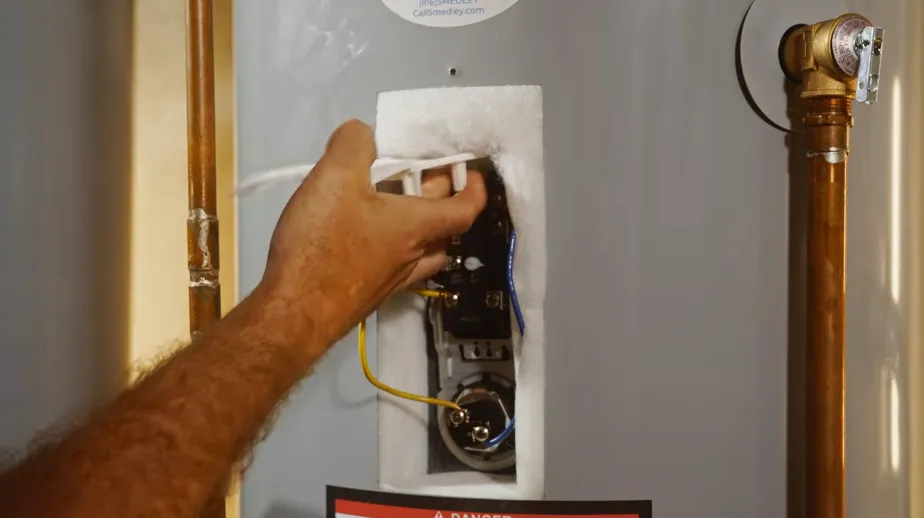
On a dripping relief valve call we start by gauging static pressure, then we check the expansion tank’s air charge and the pressure reducing valve. Only then do we talk about the heater. Our water pressure and PRV page explains each step.
| Finding | Usual fix |
|---|---|
| Tank waterlogged | Replace the tank, sized to the heater and pressure, and set its air charge to match house pressure |
| No tank on a closed system | Add one on the building side of the valve, as UPC 608.3 requires |
| Pressure high all day | Pressure reducing valve failing or set wrong: adjust or replace, then recheck the tank |
| Pressure normal, valve still drips | Relief valve itself may be worn: replace the valve, never plug it |
Westhill providers, if you need them:
| Provider | 24 hour line | In this neighborhood |
|---|---|---|
| Northshore Utility District | 425-398-4400 | Top of Westhill, west-central and southern portions. |
| City of Bothell water and sewer | 425-488-0118 | Extreme east-central and southeast portions. |
| Alderwood Water & Wastewater District | 425-787-0250 | The Snohomish County portion. |
Straight answers
Expansion tank questions from Westhill
What does a thermal expansion tank do?
It gives heated water room to expand. Water barely compresses, so in a closed system the pressure climbs every time the water heater runs. The tank's air cushion absorbs that extra volume so pressure does not spike.
Is an expansion tank required in Washington?
Washington adopts the 2021 Uniform Plumbing Code with state amendments. UPC section 608.3 requires an approved, adequately sized expansion tank when the water system has a check valve, backflow preventer or other normally closed device that stops pressure from flowing back to the main.
Why is my water heater relief valve dripping?
The most common cause is thermal expansion in a closed system with a missing or failed expansion tank, or high house pressure from a failing pressure reducing valve. Check pressure and the tank before replacing the heater.
How do I know if my expansion tank is bad?
Tap it: a working tank sounds hollow at the top. Briefly press the air valve: water instead of air means the bladder failed. A relief valve that drips after the heater runs is another sign.
Who supplies water in Westhill?
The City of Bothell's subarea plan says Northshore Utility District serves the top of Westhill and its west-central and southern areas, the City of Bothell serves the extreme east-central and southeast, and Alderwood serves the Snohomish County portion.
Can I just plug a dripping relief valve?
No. The relief valve is a safety device. Plugging it removes the last protection against dangerous pressure in the tank. Find and fix the cause instead.
Related
Other things we fix in Bothell
Water Pressure, PRV & Expansion Tanks
We gauge static pressure before recommending any valve or tank.
Water Heater Repair & Replacement
Tank, tankless and heat pump, with the relief valve checked before anyone sells you a new tank.
Leak Detection & Pipe Repair
Pinhole, slab and crawlspace leaks, plus the free meter test you can run yourself first.
More Bothell plumbing guides
Relief valve dripping in Westhill?
We gauge the pressure and check the tank before anyone recommends a new heater. Answered 24 hours a day.